IPTV vs Cable: The Future of Streaming Live TV and Movies
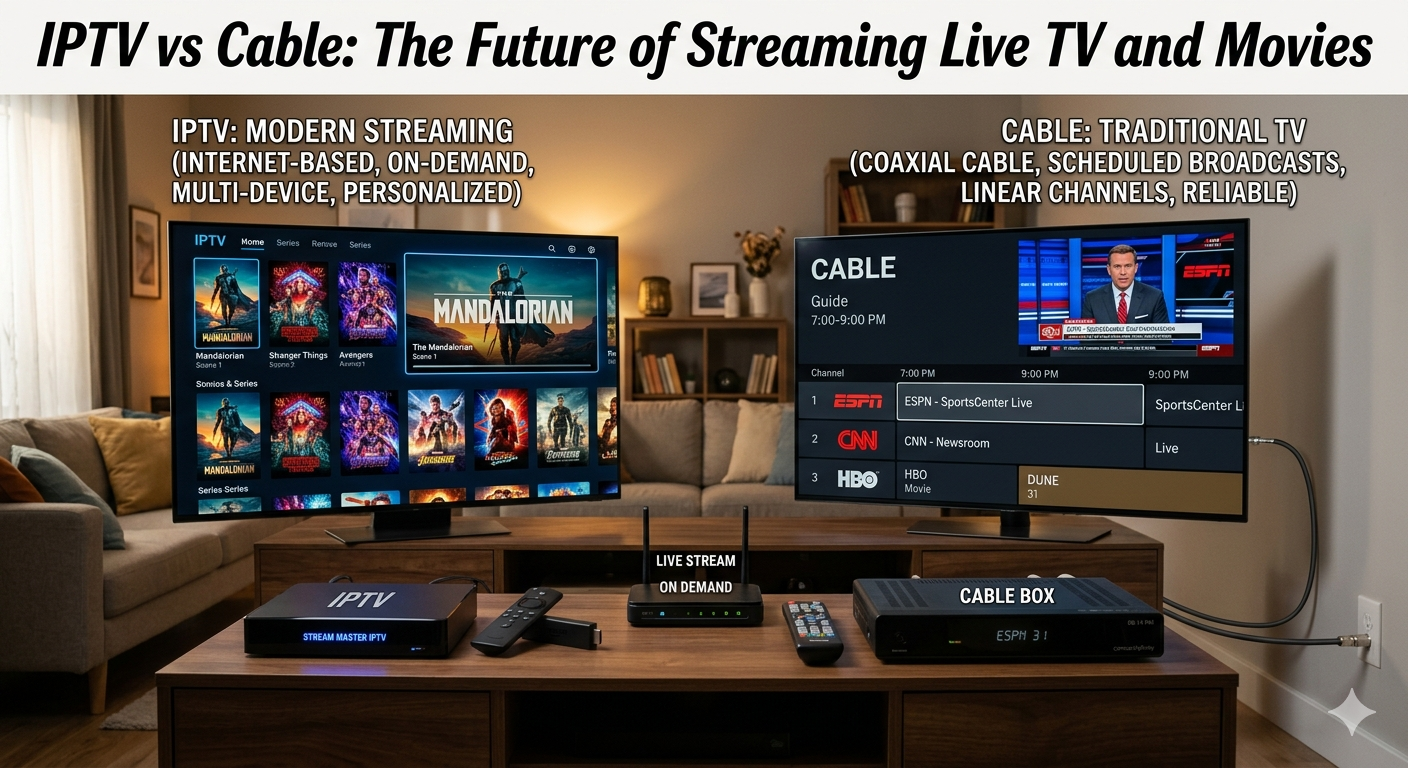
IPTV vs Cable: The Future of Streaming Live TV and Movies
The way we watch television is changing fast. Traditional cable TV has been the standard for decades, but IPTV (Internet Protocol Television) is quickly emerging as the preferred choice for streaming live TV, movies, sports, and shows. With smart TVs, smartphones, tablets, and set-top boxes, IPTV allows viewers to watch content anywhere, anytime. In this article, we’ll explore IPTV vs cable, explain how IPTV works, and show why it’s considered the future of television streaming.
Understanding Cable TV
Cable TV delivers television channels through physical coaxial or fiber-optic cables. Subscribers pay monthly fees for channel packages, often with additional charges for premium channels like HBO or Showtime. While cable provides reliable live TV and consistent picture quality, it has some drawbacks:
-
Limited channel selection
-
High subscription costs and hidden fees
-
Minimal on-demand flexibility
-
Hardware dependence, requiring a cable box for each TV
-
Difficulty accessing content on the go without extra apps
Cable works best at home but lacks the mobility and customization that modern viewers demand.
What Is IPTV?
IPTV (Internet Protocol Television) delivers television content over the internet rather than through physical cables. IPTV provides:
-
Live TV streaming – Watch channels in real time
-
Video on demand (VOD) – Access movies and shows anytime
-
Time-shifted TV – Replay programs you missed
Unlike cable, IPTV is device-agnostic. You can stream content on smart TVs, smartphones, tablets, PCs, and set-top boxes. Many IPTV services support HD and 4K streaming, offering higher-quality video than most cable packages. Subscriptions are often more affordable, with fewer hidden fees. Users can also create custom playlists and organize favorite channels for a personalized experience.
Popular IPTV apps like IPTV Smarters, GSE Smart IPTV, TiviMate, and XCIPTV Player make accessing live channels, movies, and shows seamless across devices.
Comparing IPTV and Cable
While both provide access to television content, IPTV offers several advantages over traditional cable:
-
Device flexibility: Watch IPTV on multiple devices anytime, anywhere, while cable requires a physical connection.
-
Content variety: IPTV provides international channels, live sports, news, movies, and on-demand content, whereas cable is mostly limited to predefined channel packages.
-
Cost efficiency: IPTV subscriptions are typically lower, offering more content for less money.
-
High-quality streaming: HD and 4K content is often available with IPTV, with adaptive streaming to match your internet speed.
-
Customization: Organize channels, create favorites, and manage playlists—something cable cannot offer.
-
Mobility: IPTV allows streaming on smartphones and tablets, making live TV and movies accessible anywhere, even on the go.
These benefits make IPTV the clear choice for viewers who want flexibility, affordability, and control over their content.
Why IPTV Is the Future of Television
-
Mobility: Stream live TV, movies, and shows wherever you are using mobile devices.
-
Vast Content Selection: Access international channels, sports, movies, news, and VOD libraries.
-
Affordable and Scalable: Choose subscription packages that fit your needs, avoiding cable’s hidden fees.
-
Advanced Technology: Support for HD, Full HD, and 4K streaming with adaptive video quality.
-
Customization: Organize playlists, favorite channels, and content categories for a personalized experience.
-
Integration with Smart Devices: Works on smart TVs, mobile devices, tablets, PCs, and set-top boxes, giving viewers seamless access.
IPTV is rapidly replacing traditional cable, offering a modern, convenient, and cost-effective streaming solution.
Tips for a Smooth IPTV Experience
To optimize IPTV streaming and get the most out of your subscription:
-
Use high-speed internet, ideally 10 Mbps for HD and 25 Mbps or higher for 4K.
-
Prefer wired Ethernet connections for stability and reduced buffering.
-
Keep IPTV apps updated to avoid bugs and compatibility issues.
-
Organize playlists and favorites for quick access to channels and on-demand content.
-
Verify server status with your IPTV provider if streams fail to load.
Following these steps ensures smooth and uninterrupted streaming across all your devices.
Legal Considerations
Not all IPTV services are legal. Stick to licensed IPTV providers to ensure safe, reliable, and consistent access to live TV, movies, sports, and international channels. Illegal IPTV streams may be free but often suffer from downtime, low quality, and potential legal issues.
Conclusion
Comparing IPTV vs cable, it’s clear that IPTV offers superior flexibility, affordability, and content variety. With support for smart TVs, mobile devices, tablets, PCs, and set-top boxes, IPTV allows viewers to stream live TV, movies, shows, sports, and international channels anywhere. Its HD and 4K quality, personalized playlists, and on-demand features make it the future of television.
For anyone looking to cut the cord, stream smarter, and watch content on their own terms, IPTV is not just an alternative—it’s the new standard in digital entertainment.
Conclusion
To conclude, IPTV vs Cable: The Future of Streaming Live TV and Movies provides valuable insights into improving your IPTV experience on any device.
By following the steps in this guide, you can enjoy smooth and high-quality streaming with ease.
Always rely on a trusted IPTV provider, keep your app updated, and maintain a stable internet connection for the best performance.
For reliable IPTV services in the UK, visit
iptvca.it.com —
your go-to destination for premium IPTV UK subscriptions.
Contact Us
Have questions or need assistance? We're here to help!
Get in Touch
Email Us
contact@iptvca.it.com
Available 24/7
Call Us
+447476922424
Available 24/7
Live Chat
Available on our website
Response time: Under 5 minutes
Our Hours
Customer Support: 24/7
Sales Department: Mon-Fri, 9am-6pm GMT
Technical Support: 24/7